


Recovery Is Just as Important as Training
A lot of people think fitness progress comes from doing more — heavier weights, longer runs, training every single day. And yes, effort matters. But here’s something many people learn the hard way: your body doesn’t improve while you’re working out. It improves afterward.
Workouts put stress on your body.
Recovery is what allows it to adapt and come back stronger.
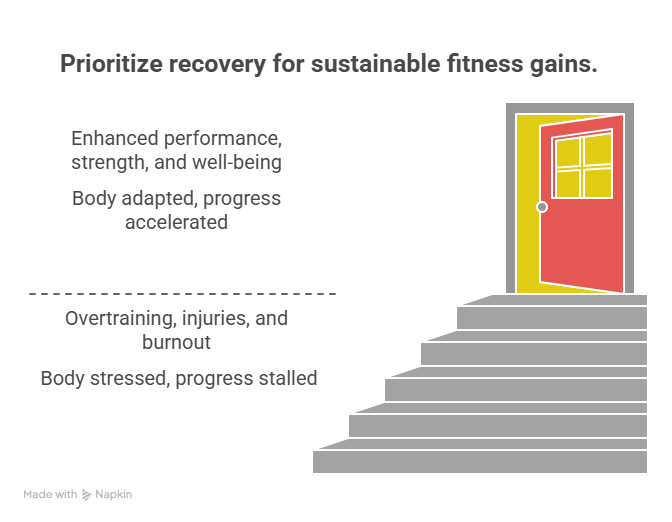
If recovery is ignored, even the most well-planned training routine can lead to constant tiredness, nagging injuries, slow progress, and eventually burnout.
What Does Recovery Actually Mean?
Recovery isn’t just about taking a day off. It’s the process your body goes through to fix what training breaks down. That includes:
- Repairing muscle fibers
- Restoring energy levels
- Letting joints and tendons heal
- Balancing hormones
- Resetting your nervous system
- Clearing mental fatigue
When recovery is missing, performance drops — just like a car that’s driven nonstop without fuel.
Why Recovery Makes Such a Big Difference
Training hard without enough rest keeps your body stuck in stress mode. Over time, that shows up as:
- Muscles that always feel sore or tight
- Poor sleep and low daily energy
- More injuries and aches
- Slower fat loss and weaker muscle gains
- Loss of motivation to even show up
On the flip side, when recovery is handled well, workouts feel better, strength improves faster, and consistency becomes easier.
Sleep: The Most Powerful Recovery Tool
Sleep does more for your fitness than most people realize. While you’re sleeping, your body repairs muscle tissue, releases growth hormone, and resets your nervous system.
For anyone who trains regularly, 7–9 hours of good-quality sleep isn’t a luxury — it’s a requirement. No supplement, massage, or gadget can replace it.
Active Recovery Isn’t a Waste of Time
Recovery doesn’t always mean lying on the couch. Light movement can actually help your body recover faster.
Walking, stretching, mobility drills, yoga, or easy cycling increase blood flow, reduce stiffness, and help muscles loosen up without adding extra stress.
Done right, active recovery keeps you moving while still allowing healing.
Nutrition Plays a Big Role
What you eat after training matters more than many people think. Protein helps repair muscles, carbs refill energy stores, and healthy fats support hormone health.
Water is just as important. Even mild dehydration can slow recovery and make you feel more fatigued than you should.
Rest Days Are Part of the Plan
Rest days aren’t a sign of weakness or laziness. They’re a smart training choice.
Planned rest allows your muscles, joints, and nervous system to fully recover, so your next workout feels stronger and more productive.
Progress comes from consistency — and consistency comes from training in a way your body can sustain.
Final Thoughts
Training challenges your body.
Recovery is what turns that challenge into results.
If your goal is long-term fitness, strength, fat loss, or better performance, recovery isn’t optional. Treat it with the same respect as your workouts, and progress becomes smoother, safer, and more enjoyable.
Train hard when it’s time.
Recover well when it matters.
That’s how real results are built.