
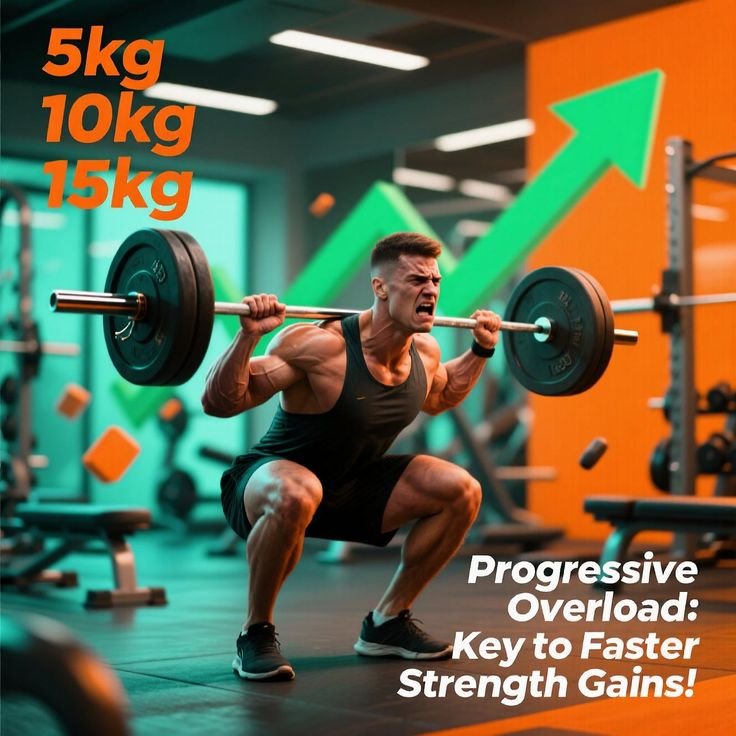

Many beginners think muscle growth comes from doing random hard workouts. But muscles don’t grow from confusion — they grow from progressive demand.
Progressive overload simply means asking your muscles to do slightly more over time.
That “more” doesn’t always mean heavier weight. It could be:
- one extra rep
- better control
- improved form
- shorter rest time
- more consistency week to week
You don’t need dramatic jumps in weight. In fact, small improvements are usually better because they’re sustainable.
If you look at people who’ve trained for years, their progress didn’t come from sudden breakthroughs. It came from tiny improvements repeated for a long time.
That’s why tracking workouts matters. Without tracking, it’s easy to repeat the same effort every week without realizing it.
Muscle growth is the body adapting to stress it hasn’t fully mastered yet.
Progressive overload keeps that adaptation happening.
Why Consistency Beats Motivation in Fitness
Motivation feels powerful — but it rarely lasts.
Consistency is what actually builds results.
Almost everyone starts fitness feeling motivated. New routines, new diet plans, new goals. But motivation fades when life gets busy, energy drops, or results slow down.
That’s normal.
The people who make long-term progress aren’t the most motivated. They’re the ones who make training part of their routine, like brushing their teeth.
Some workouts will feel great.
Some will feel average.
Some will feel difficult for no clear reason.
But showing up anyway keeps momentum alive.
Fitness progress doesn’t come from perfect weeks. It comes from months of imperfect but consistent effort.
Once consistency becomes automatic, motivation becomes less important.
And that’s when fitness starts feeling sustainable.