
There’s a moment that happens to almost everyone who trains with weights long enough.
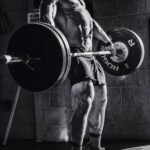
Your back feels strong during deadlifts. Your legs feel stable. Your form is solid. But the bar starts slipping before the set is finished. Not because your body is tired — because your hands are.
It’s frustrating. You know you could lift more, but your grip gives up first.
This is where many people realize something important: grip strength quietly limits overall strength more often than people expect.
Grip training rarely gets attention in workout plans. Most people assume it will improve automatically from lifting weights. Sometimes it does — but often not enough to keep up with bigger muscles like the back and legs.
And when grip becomes the weak link, progress slows down.
The Hidden Role of Grip in Compound Lifts
Grip strength matters most in pulling movements:
- deadlifts
- rows
- pull-ups
- farmer’s carries
- shrugs
These exercises rely on large muscle groups, but the hands are the connection between the body and the weight. If that connection fails, the set ends early.
This doesn’t mean your back or legs are weak. It just means your grip hasn’t developed at the same speed.
Many lifters solve this by using lifting straps immediately. Straps are useful tools, but relying on them too early can prevent grip strength from developing naturally.
Your grip adapts like any other muscle group — through repeated challenge.
Grip Strength Is More Than Just Hands
When people think about grip, they usually imagine squeezing something hard. But grip strength actually involves the entire forearm and nervous system coordination.
There are three main types of grip strength:
- Crushing grip (closing your hand around something)
- Holding grip (maintaining grip under load)
- Pinch grip (holding objects between fingers and thumb)
Deadlifts mostly use holding grip. Pull-ups combine holding and crushing grip. Carry movements train endurance in the forearms.
This is why forearms often burn before larger muscles during pulling exercises.
They’re working constantly, even when you’re not thinking about them.
Why Grip Develops Slower Than Other Muscles
Forearm muscles are smaller than major muscle groups like the back, chest, or legs. Because of that, they fatigue faster.
But there’s another reason grip develops slowly — people rarely train it directly.
Most workout programs include exercises for chest, shoulders, arms, and legs, but almost none include specific grip work.
Over time, stronger back and leg muscles outgrow the grip’s ability to hold heavy weight.
That imbalance becomes noticeable during heavy lifts.
Signs Your Grip Is Holding You Back
Grip weakness shows up in small ways before it becomes obvious.
You might notice:
- the bar slipping during deadlifts
- needing chalk frequently
- forearms fatiguing quickly
- difficulty holding heavy dumbbells
- struggling to hang from a pull-up bar
These signs don’t mean something is wrong. They just mean grip strength needs attention.
And the good news is — grip strength responds quickly to training.
Simple Ways to Build Grip Strength
Grip training doesn’t require complicated equipment.
Often, the best exercises are simple.
Farmer’s carries are one of the most effective options. Holding heavy dumbbells and walking forces the forearms to stay engaged continuously.
Dead hangs from a pull-up bar also build endurance and finger strength.
Even small adjustments to normal workouts help:
- holding the bar longer during deadlifts
- using double-overhand grip more often
- slowing down repetitions during rows
These changes add only a few minutes to training but create noticeable improvements.
Within a few weeks, weights often feel more secure in the hands.
The Nervous System Connection
Grip strength is not just muscular — it’s neurological.
Your brain learns how firmly to contract the forearm muscles to hold weight safely. With practice, that connection becomes more efficient.
That’s why hanging from a bar feels difficult at first but becomes easier with repetition.
The nervous system becomes better at maintaining tension without fatigue.
This adaptation improves faster than most people expect.
Grip Strength and Long-Term Training
Strong grip does more than help lifting performance. It improves confidence during heavy exercises.
When the bar feels secure, focus shifts to movement instead of worrying about losing control.
That confidence allows better effort during compound lifts.
Grip strength also becomes more valuable as training experience increases. Heavier weights demand stronger connection between body and equipment.
Ignoring grip strength early often creates limitations later.
Training it gradually prevents that problem.
A Small Detail That Changes Big Lifts
Grip strength is easy to overlook because it doesn’t feel as important as chest, legs, or back training.
But sometimes the smallest muscles determine how far bigger muscles can go.
A stronger grip doesn’t just help you hold weight — it allows your entire body to express its strength fully.
And like most things in fitness, improving it doesn’t require dramatic changes.
Just a little attention, consistently.