
Heart Health: Why It Actually Matters More Than You Think
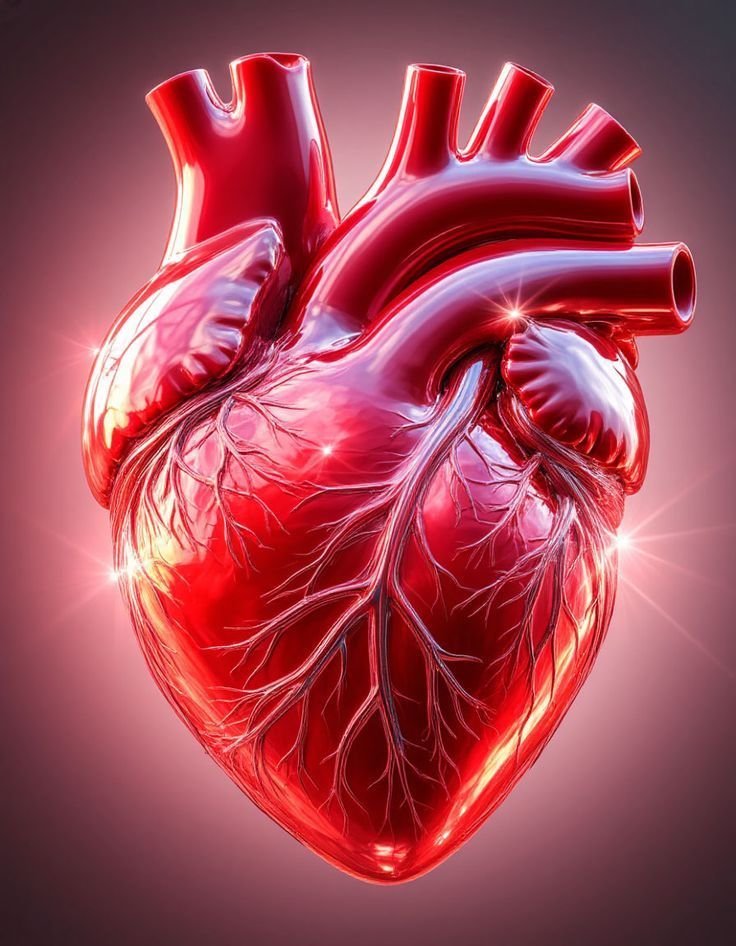
When most people think about fitness, they think about what they can see in the mirror—abs coming in, arms getting bigger, weight going down. That’s normal. But there’s one thing doing all the hard work behind the scenes that hardly gets any attention: your heart.
Your heart works nonstop. It doesn’t care if it’s your rest day, if you skipped the gym, or if you’re asleep. It keeps pushing blood and oxygen to your muscles, your brain, and every organ in your body. If your heart isn’t in good shape, no amount of muscle or fancy workout plans will save your health in the long run.
These days, heart problems aren’t limited to older people. Even young adults are facing issues because of long sitting hours, fast food, stress, smoking, poor sleep, and almost no daily movement. The scary part is that heart damage usually starts quietly. You don’t feel it until it becomes serious.
What Happens When You Ignore Heart Health for Too Long?
Heart issues don’t appear suddenly. They build slowly, often without obvious signs.
High Blood Pressure
When the heart has to push harder than it should, the pressure inside your blood vessels increases. Over time, this damages the arteries and raises the risk of stroke or heart attack.
Heart Problems
When arteries get blocked or narrowed, the heart doesn’t receive enough blood. This can show up as chest tightness, breathlessness, constant tiredness, or poor exercise capacity.
Heart Attack
In simple terms, a heart attack happens when blood flow to the heart suddenly stops. In most cases, it’s the result of years of unhealthy habits, not one bad meal or one missed workout.
Weak Workout Performance
If your heart is weak, your training will feel harder than it should. You’ll get tired quickly, recovery will be slow, and even basic exercises can feel draining.
How Regular Exercise Keeps Your Heart Healthy
You don’t need extreme workouts to protect your heart. What matters most is moving your body regularly.
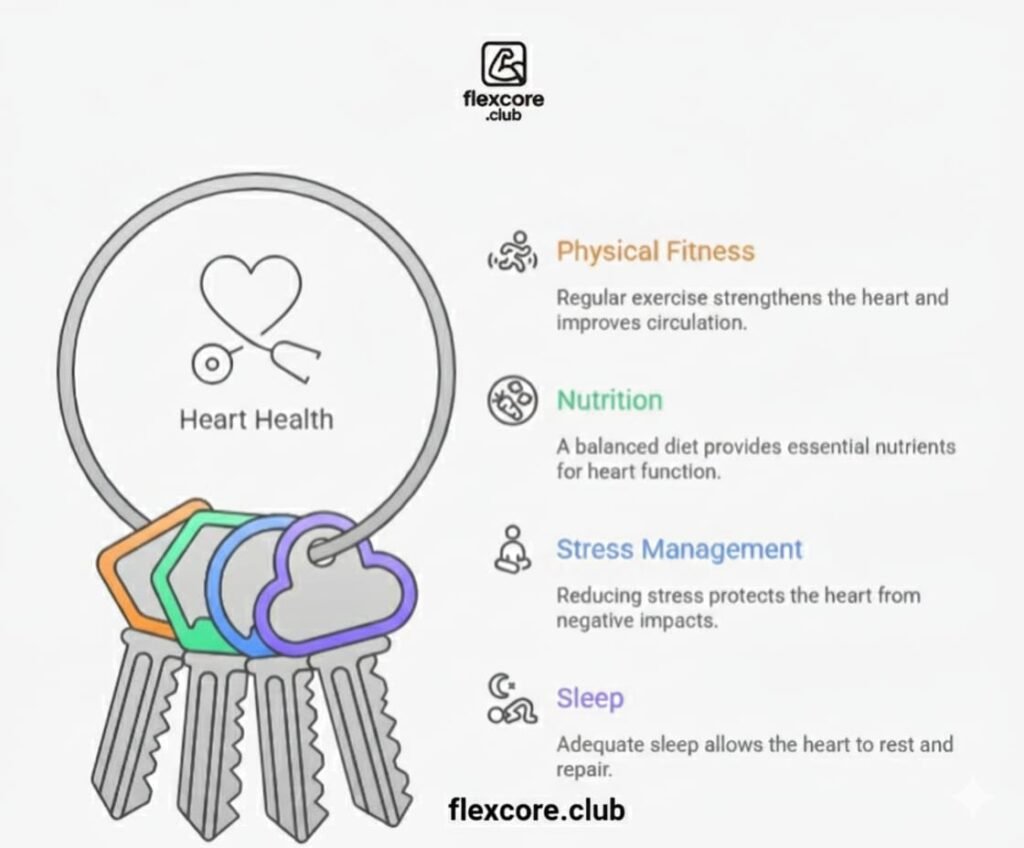
Simple activities like walking, jogging, cycling, swimming, or even skipping help your heart pump blood more efficiently. Over time, this improves stamina and overall energy levels.
Strength training also plays a role. Lifting weights improves metabolism, helps control blood sugar, and reduces unhealthy body fat—all of which support heart health.
Short, intense workouts like HIIT can also be useful when done properly. They challenge the heart in a controlled way and improve endurance without spending hours in the gym.
When exercise becomes part of your routine, cholesterol levels improve, weight stays under control, and your heart becomes stronger day by day.
Eating for Your Heart Without Making It Complicated
Your heart responds directly to what you eat on a daily basis.
Foods That Help Your Heart
Fresh fruits and vegetables
Whole grains like oats, brown rice, and millets
Nuts, seeds, olive oil, and fatty fish
Protein sources like eggs, paneer, curd, legumes, and chicken
Foods That Slowly Harm Your Heart
Packaged and ultra-processed foods
Fried and junk foods
Too much sugar and refined carbs
Excess salt and unhealthy fats
You don’t need a perfect diet. You just need balance, portion control, and consistency most of the time.
Small Daily Habits That Protect Your Heart
Heart health is built through everyday choices, not big promises.
Avoid smoking and keep alcohol intake low
Find simple ways to manage stress—breathing, walking, or quiet time
Sleep properly instead of treating sleep like an option
Drink enough water throughout the day
Maintain a healthy body weight
These habits reduce stress on the heart and help it function smoothly for years.
Stress and Heart Health Are Deeply Linked
Mental stress affects the heart more than people realize. Constant stress keeps your body in fight-or-flight mode, which raises blood pressure and puts extra load on the heart.
Regular workouts, staying active, and taking time to slow down mentally help calm the nervous system. This directly reduces stress-related damage to the heart.
Final Thoughts
Heart health isn’t something you suddenly fix after a warning sign appears. It’s something you build quietly, every day—through movement, food choices, stress control, and basic discipline.
A healthy heart means you train better, recover faster, feel more energetic, and stay active for longer years.
At FlexCore, we believe real fitness starts from the inside. When your heart is strong, everything else works better. Take care of your heart now—it’s the one muscle you can’t replace.