

Most people reach this point sooner or later.
You’re going to the gym regularly.
You’re sweating hard. Heart rate goes crazy. Workouts feel intense.
But your body isn’t changing much anymore.
Fat loss slows down.
Energy drops.
Recovery feels harder than it should.
At that stage, most people assume one thing — I’m not training hard enough.
Usually, it’s the opposite.
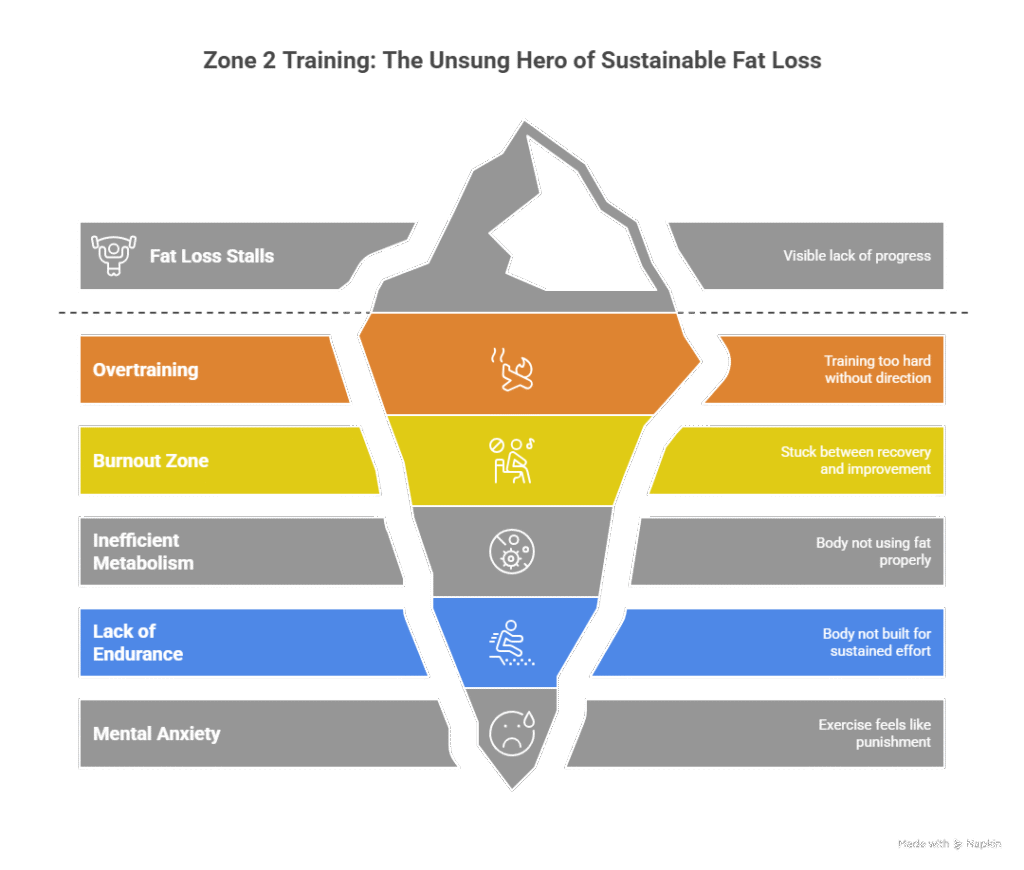
You’re training hard without direction.
That’s where Zone 2 training quietly comes in. No hype. No drama. Just results that add up over time.
So What Is Zone 2 Training, Really?
Let’s keep this simple.
Zone 2 is steady movement where your breathing is faster, but controlled.
You’re working — but you’re not suffering.
You could still talk.
You don’t feel like stopping every five minutes.
And you’re not destroyed afterward.
Examples?
- Walking uphill
- Easy cycling
- Slow jogging
- Smooth rowing
Nothing extreme. Nothing flashy.
And that’s exactly why it works.
Why “All-Out” Training Stops Working After a While
High-intensity workouts feel productive.
They look productive.
They make you feel like you did something.
But when everything is intense, problems show up fast:
- You’re tired all the time
- Sleep quality drops
- Small aches turn into injuries
- Fat loss stalls
A lot of people end up stuck in this weird middle zone — not easy enough to recover from, not hard enough to improve performance.
That’s the burnout zone.
Zone 2 pulls you out of it.
What Zone 2 Actually Does for Fat Loss
This is the part most people miss.
Zone 2 trains your body to use fat properly.
Not just during workouts — but all day.
Over time, it:
- Improves your aerobic system
- Makes your body better at using oxygen
- Improves insulin sensitivity
- Lowers resting heart rate
Translation?
Your body becomes more efficient.
Fat loss stops feeling like a constant fight.
Why Athletes Spend So Much Time Here
Elite endurance athletes don’t live in high intensity.
They visit it.
Most of their training — around 70 to 80 percent — is Zone 2.
Not because they’re lazy.
Because they understand one thing:
You don’t build a strong engine by redlining it every day.
For regular people, Zone 2 is even more useful:
- Less joint stress
- Lower injury risk
- Easier to stay consistent
- Much easier to recover from
You don’t quit Zone 2 training.
You quit workouts that punish you.
Zone 2 vs HIIT (This Isn’t a Fight)
This isn’t about choosing sides.
HIIT has a place.
It builds power. Speed. Conditioning.
Zone 2 does something different.
It builds endurance. Metabolic health. Recovery.
The mistake isn’t doing HIIT.
The mistake is only doing HIIT.
Think of Zone 2 as the base.
Intensity is just the add-on.
How You Know You’re Doing It Right
Forget formulas.
Use feel.
You’re in Zone 2 if:
- You can talk in full sentences
- Breathing is steady, not panicked
- You feel like you could keep going
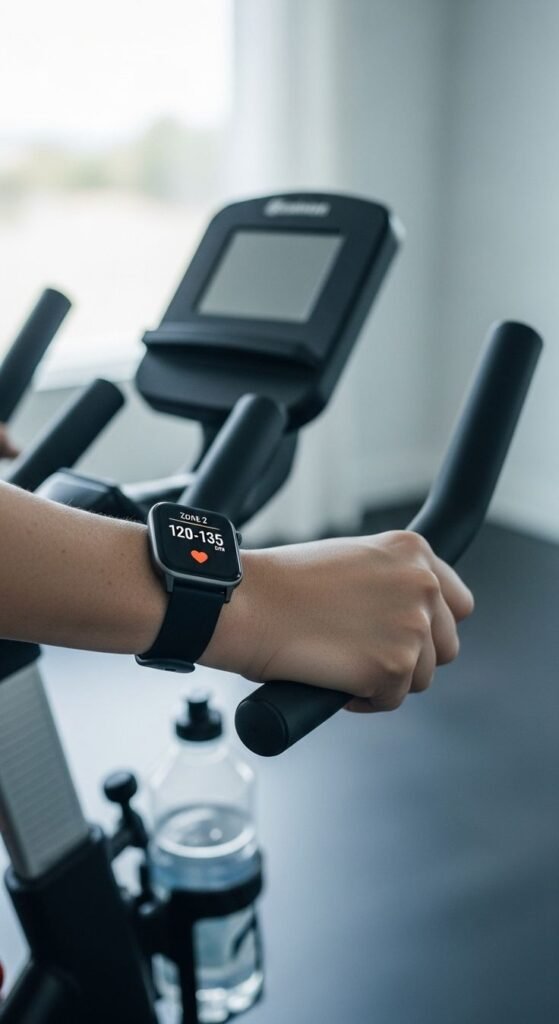
- Heart rate stays stable
If you finish and feel better instead of wrecked — that’s a good sign.
How Often Should You Do It?
For most people:
- 3 to 4 sessions a week
- 30 to 60 minutes
It fits perfectly around:
- Strength training
- Mobility work
- One or two intense days
This is how people stay lean without burning out.
The Mental Side Nobody Mentions
Zone 2 does something rare.
It removes anxiety from exercise.
No pressure.
No comparison.
No “I must destroy myself” mindset.
You just move.
And you show up again tomorrow.
That’s how progress actually happens.
Why Zone 2 Is Getting Popular Now
People are tired.
Tired of injuries.
Tired of being sore all the time.
Tired of fitness feeling like punishment.
They want results that last.
Zone 2 fits real life:
- Busy schedules
- High stress
- Long-term health goals
That’s why more coaches, doctors, and athletes are quietly recommending it.
Final Thought
Zone 2 training won’t impress anyone on Instagram.
No collapse photos.
No dramatic captions.
But it will:
- Improve heart health
- Support fat loss
- Increase energy
- Make fitness sustainable
In the long run, that’s what matters.
Not harder workouts.
Smarter ones.